Showing posts with label Symptoms. Show all posts

Wednesday

Rheumatoid arthritis and Sjogren's syndrome

RA and SS

A percentage of people with rheumatoid arthritis (RA) go on to develop Sjögren's syndrome (SS) which is another autoimmune disorder.  When someone with an established autoimmune disease, such as RA, develops SS it is called Secondary Sjögren's syndrome. 

The basic symptoms are dry eyes and dry mouth but the list of symptoms is long and not everyone gets all of them.

In a 2013 study researchers found that RA patients with secondary Sjögren’s syndrome had distinct features that set them apart from those with RA alone:

  • higher RA disease activity.
  • more severe arthritis, with a greater number of swollen, tender, and deformed joints. 
  • tended to be older and have a longer duration of RA. 
  • appeared to have stronger hereditary component to their disease.
  • a clearer history of autoimmune disease in their family. 
  • presence of certain antibodies, rheumatoid factor (RF) as well as other auto-antibodies (SSA and SSB). 
  • more likely to have blood abnormalities. 
  • more likely to have fever and rash.
  • were more likely to have Interstitial lung disease, a common lung complication.

Find out more about Sjogren's Syndrome at Sjogren's Syndrome Info

Friday

Do I Have Arthritis?


Do I Have Arthritis?

Pain is your body’s way of saying, “Something’s not right.” And when that pain settles in your joints—making it hard to move, bend, or even rest—it might be a sign of arthritis.

Arthritis isn’t just one condition. It’s a broad term for over 100 different diseases that affect the joints and sometimes other parts of the body. The most common types include:

  • Osteoarthritis – wear-and-tear damage over time

  • Rheumatoid arthritis – an autoimmune condition

  • Gout – caused by uric acid crystal buildup

  • Psoriatic arthritis – linked to psoriasis

  • Lupus-related arthritis – part of a systemic autoimmune disease

What Might You Feel?

While joint pain is the most obvious symptom, arthritis can show up in other ways too. You might notice:

  • Swelling, stiffness, or warmth in your joints

  • Fatigue or low energy

  • Fever or unexplained weight loss

  • Skin rashes or itching

  • Trouble breathing or chest discomfort (in autoimmune types)

These symptoms can overlap with other illnesses, so it’s important not to self-diagnose. But if joint pain is persistent, especially if it’s affecting your daily life, it’s worth talking to a doctor.

Bottom Line

Yes—joint pain is the hallmark of arthritis, but it’s not the whole story. Some types affect your immune system, skin, lungs, or even your heart. The earlier you get clarity, the better your chances of managing symptoms and protecting your joints.

Do I Have Arthritis? and what it feels like

Monday

What Is Arthritis?

Many people start to feel pain and stiffness in their bodies over time.

Sometimes their hands or knees or shoulders get sore and are hard to move and may become swollen.

These people may have arthritis (ar-THRY-tis).

Arthritis may be caused by inflammation (in-flah-MAY-shun), of the tissue lining the joints. Some signs of inflammation include redness, heat, pain, and swelling. These problems are telling you that something is wrong.

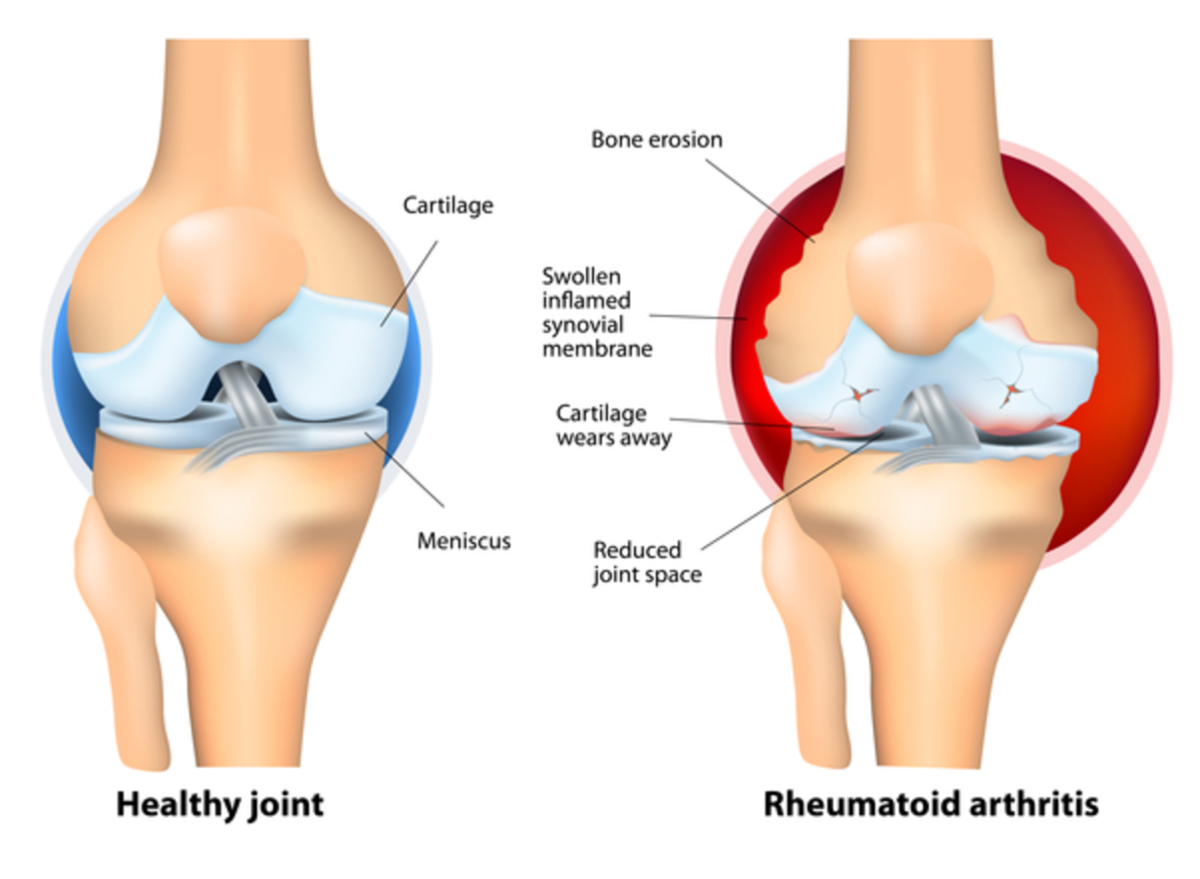
rheumatoid arthritis and normal joint compared


Joints are places where two bones meet, such as your elbow or knee. Over time, in some types of arthritis but not in all, the joints involved can become severely damaged.

There are different types of arthritis.

In some diseases in which arthritis occurs, other organs, such as your eyes, your chest, or your skin, can also be affected.

Some people may worry that arthritis means they won’t be able to work or take care of their children and their family. Others think that you just have to accept things like arthritis.

It’s true that arthritis can be painful. But there are things you can do to feel better.